In the fourth exercise of EU MODEX Cycle 12, medical and search and rescue teams joined forces in Graz, Austria, to test their interoperability and coordination in a large-scale earthquake scenario.
A complex scenario in the heart of Styria
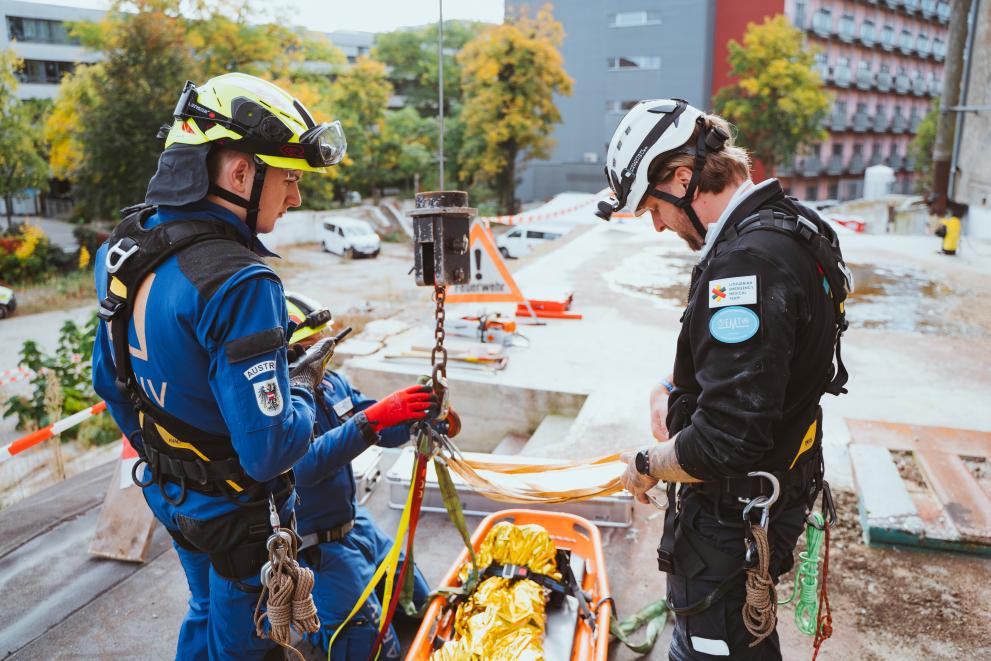
From 14 to 18 October 2025, the Graz region became the stage for an extensive EU MODEX exercise simulating the aftermath of a 7.8-magnitude earthquake. The disaster scenario involved typical post-earthquake challenges: collapsed buildings, trapped victims, and complex rescue situations in mountainous areas and caves.
Over five days, participating teams trained side by side to deliver life-saving assistance under demanding conditions, reflecting the realities of a large-scale emergency.
Teams from across Europe train together
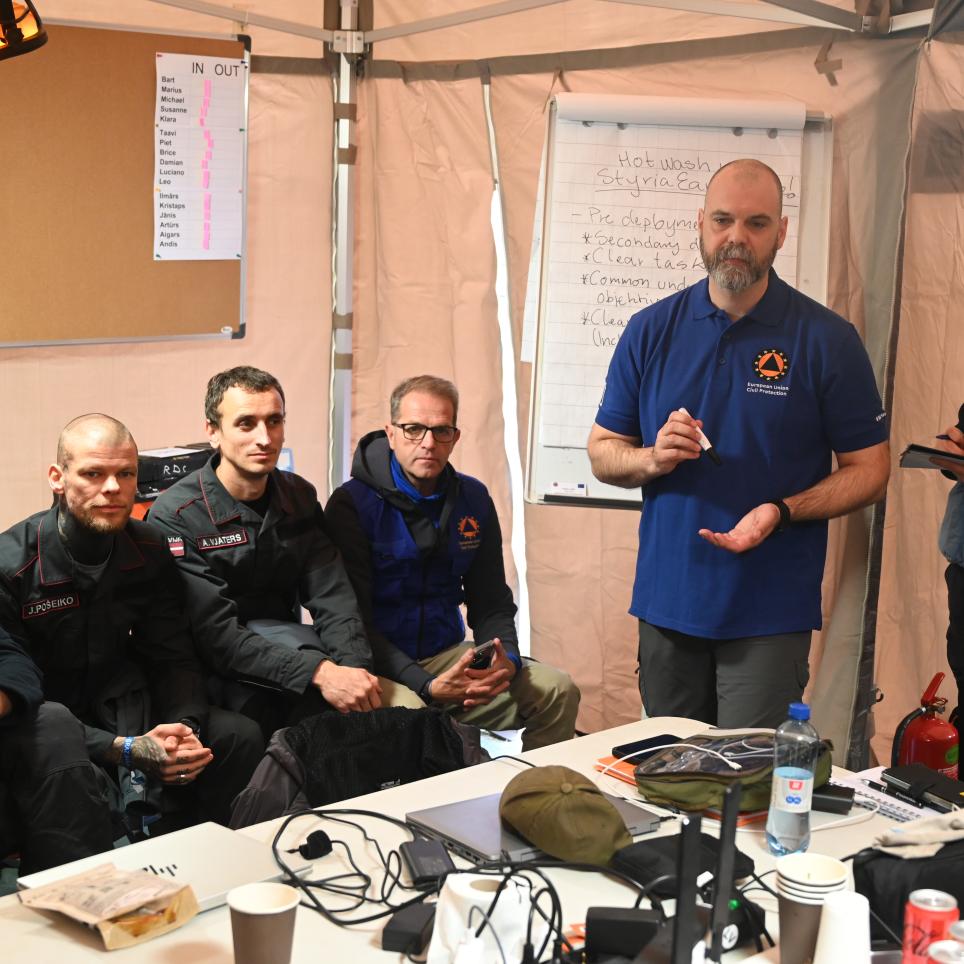
A total of 231 participants from eight countries – Austria, Croatia, Hungary, Lithuania, Romania, Spain, and Türkiye – took part in the exercise. They participated as EMTs (Emergency Medical Teams), MSAR (Mountain Search and Rescue), CSAR (Cave Search and Rescue) and Light and Medium USAR (Urban Search and Rescue) modules. These modules were supported by a European Civil Protection Team (EUCPT) and a Technical Assistance and Support Team (TAST) from Latvia.
The exercise was organised by the EU MODEX Lot 3 consortium, led by Johanniter-Unfall-Hilfe e.V., and hosted by D.M.A.T. Consulting KG (DMAT).
Testing coordination and procedures under the UCPM
The exercise focused on improving coordination between operational modules and enhancing understanding of the Union Civil Protection Mechanism (UCPM). Participants worked to strengthen their knowledge of reporting lines, joint decision-making, and the integration of various specialised capacities during international deployments.
Most exercise objectives were fully achieved. Notable progress was observed in the implementation of safety and security procedures, as well as in the exchange of good practices between teams. The exercise also stimulated new ideas for refining standard operating procedures (SOPs) and further developing joint response concepts.
Observers from across Europe
The exercise attracted numerous observers from across Europe, including two representatives from the World Health Organization and the Deputy Head of Unit A1 of the European Commission Miguelez Cabezas Borja. Their participation underlined the close cooperation between European civil protection and international health emergency response systems.

Building resilience through cooperation
EU MODEX Austria 2025 once again demonstrated the importance of cross-border collaboration and the continuous development of European disaster response capabilities. By training together in realistic scenarios, participating teams strengthened their operational readiness and reinforced Europe’s collective preparedness for future emergencies.
Source: EU Civil Protection Knowledge
By project: Field exercises for USAR/medical/EUCPT/TAST/ORC “Cycle 12” staff